
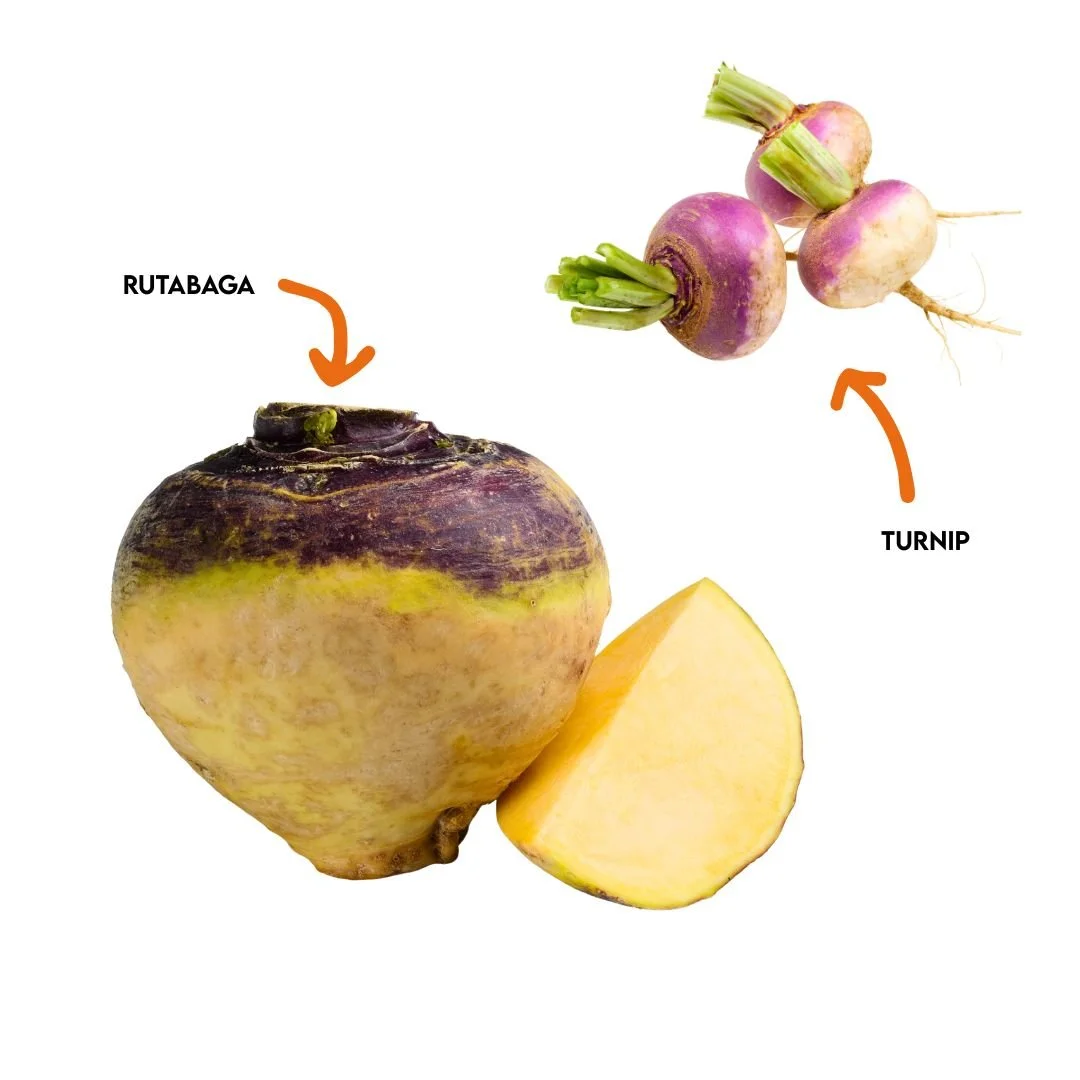
Introduction - A rutabaga might look like a slightly less pigmented beet, or a large radish, but it is a cross between a cabbage and a turnip. This winter root veggie is not spicy like a radish, but more like a less starchy potato when cut up and cubed. It’s referred to as the Swedish Turnip because Swedish cooks have a certain affinity for them. And much like the potato, this hardy winter veggie has seen people through hard times, being a steady source of vitamins and carbohydrates during wars and lean times throughout history.
Overview - They can be white and purple or greenish in color. The inside is a cream color and not the stark white of a turnip or radish. They are full of calcium and can be a good source of B vitamins and antioxidants. Their leaves are edible and can be cooked up just like turnip greens for even more nutrients.
Uses + Storage - Rutabaga can replace potatoes in just about any dish, whether a soup or a mash, but you can also grate them up with pears, apples, celery, cabbage, and carrots for a winter slaw or chop them into long strips and roast them to have with a creamy dip.
Rutabaga keep well for months in dry, cool environments like a vegetable crisper or root cellar. Do not wash them until you want to use them. Farm fresh rutabaga will need a proper rinse before use. Do not store with the greens attached!
How to pick a good rutabaga - A little dirt on root veggies is common so don’t be put off. Do look for deep punctures or soft spots - those are dealbreakers. Pick a rutabaga that is firm and not too wrinkly or soft. They should be heavy/dense as this indicates good moisture content. Pick one that is 3-5 inches, smaller ones are sweeter, larger ones get tougher.
Recipes:
Sources:
https://foodprint.org/real-food/rutabaga/
https://www.thespruceeats.com/difference-between-turnips-and-rutabagas-3050542