
Introduction - The parsnip is the carrot’s lesser-known sister and she’s constantly overlooked. She’s less flashy and muted, opting for a winter cream ensemble rather than pylon orange or broody purple. She’s the quiet, classy winter crop queen. She doesn’t need your approval, but if you get to know her and her earthy-sweet flavor, she’ll dazzle you with the possibilities.
Overview - Parsnips get sweeter after the first frost as their starches start to break down into simpler sugars. Adversity just makes her better. In ancient times, they were actually used as a sweetening agent before cane sugar was widely available. They are loaded with fiber, calcium, vitamins K and B, and potassium.
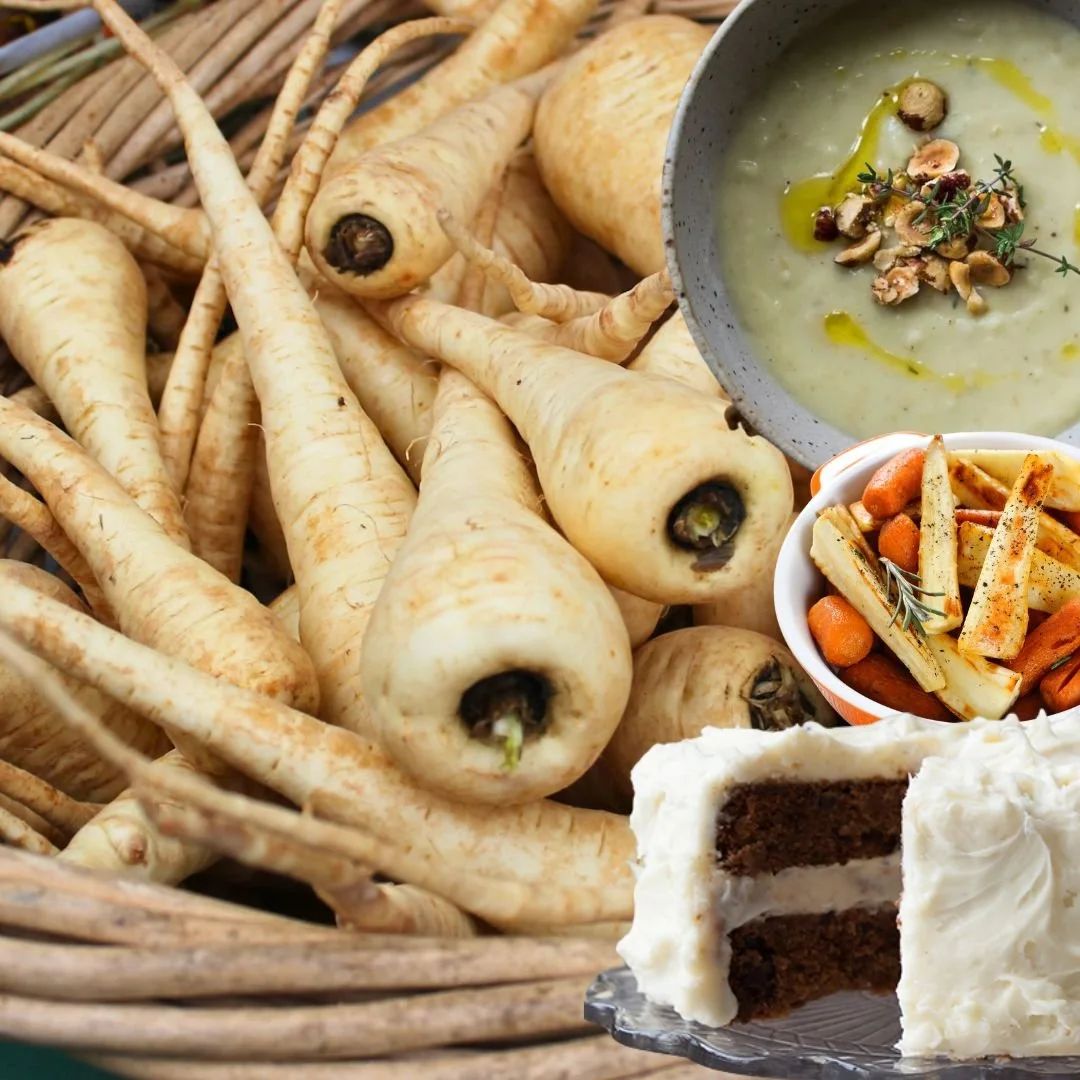
Uses + Storage - You can use parsnips for just about anything, from baking a moist cake, to a creamy soup, to crispy appetizer sticks. They store well and can be kept at room temp for a week or two. In the fridge they will last several months (but it’s recommended you eat them fresher.) They are available all winter long at the University District, West Seattle, and Capitol Hill Farmers Markets.
How to pick a good parsnip - they should be firm but not woody, and definitely not soggy or bendable. Crisp, snappy, and moist are the qualities to look for. You can always ask a farmer for guidance when you’re at the Neighborhood Farmers Markets.
Recipes:
Edible Seattle’s Parsnip Cake with Brown Butter Frosting
Feasting at Home’s Creamy Parsnip Soup with Hazelnuts and Cardamom
Bucket List Tummy’s Roasted Garlic Parsnip Fries
Sources:
https://foodprint.org/real-food/parsnips/
https://agr.wa.gov/departments/business-and-marketing-support/farm-to-school-toolkit/wa-grown-food-recipe-kit/foodtoolkit/items/vegetables/parsnips/facts