
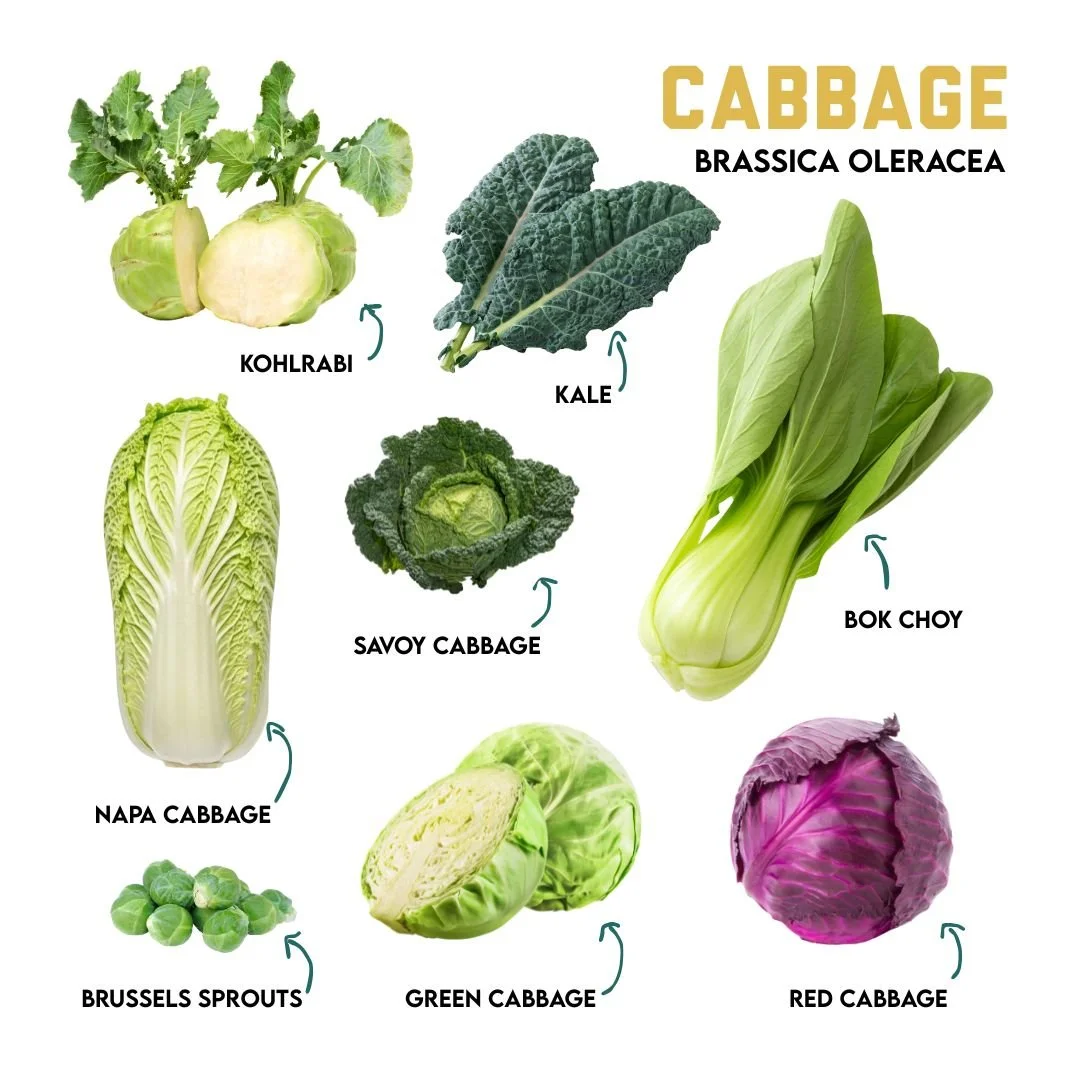
Introduction - 2026 was dubbed the Year of the Cabbage by Vogue magazine, surprising many as this humble unassuming veggie took the spotlight in January.
Though it caught many off guard, cultures all around the world have celebrated cabbage throughout history. Cabbages and people go way back, nearly 4,000 years back, to be more precise. Cabbage was one of the first domesticated plant species (Brassica oleracea) and is a very hardy and nutritious winter crop. Cabbages are a large family and come in all shapes and sizes.
This article will discuss the traditional leafy green and red cabbage varieties, but more types can be found in the Sources section of the article down below.
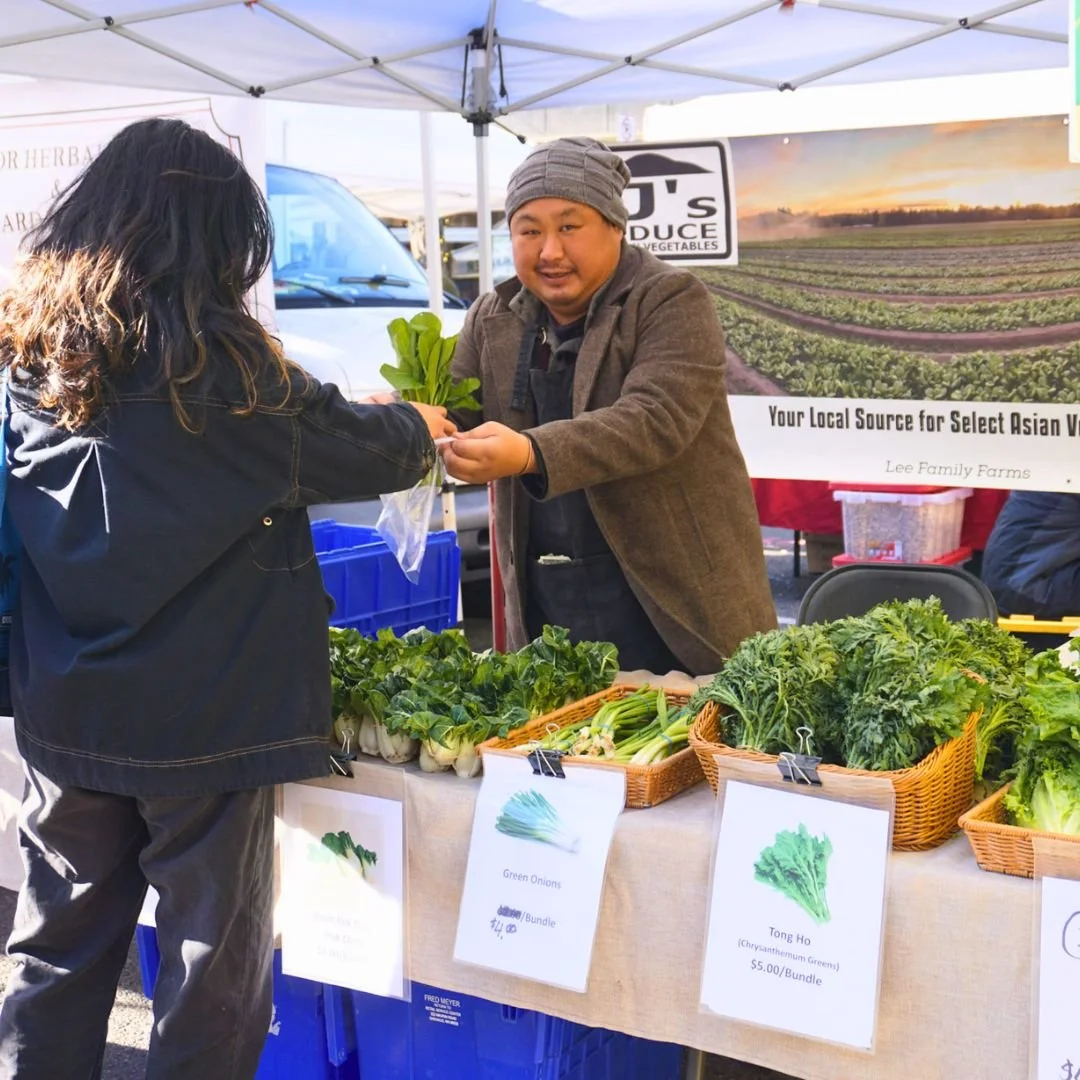
OJ’s Produce specializes in Asian greens like bok choy, choy sum, and tong ho. Find them at the West Seattle Farmers Market in the winter and Columbia City in the summer.
Overview - Cabbages are usually light or dark green, but can be reddish purple as well. They are usually a tight ball of smooth waxy leaves wrapped around each other, but some, like Kale and Savoy, can be more open and textured. (Broccoli and cauliflower are also part of the brassica or cabbage species, but have slightly different properties.) Cabbages are bursting with Vitamin C and have tons of probiotics that help nourish your gut and immune system.
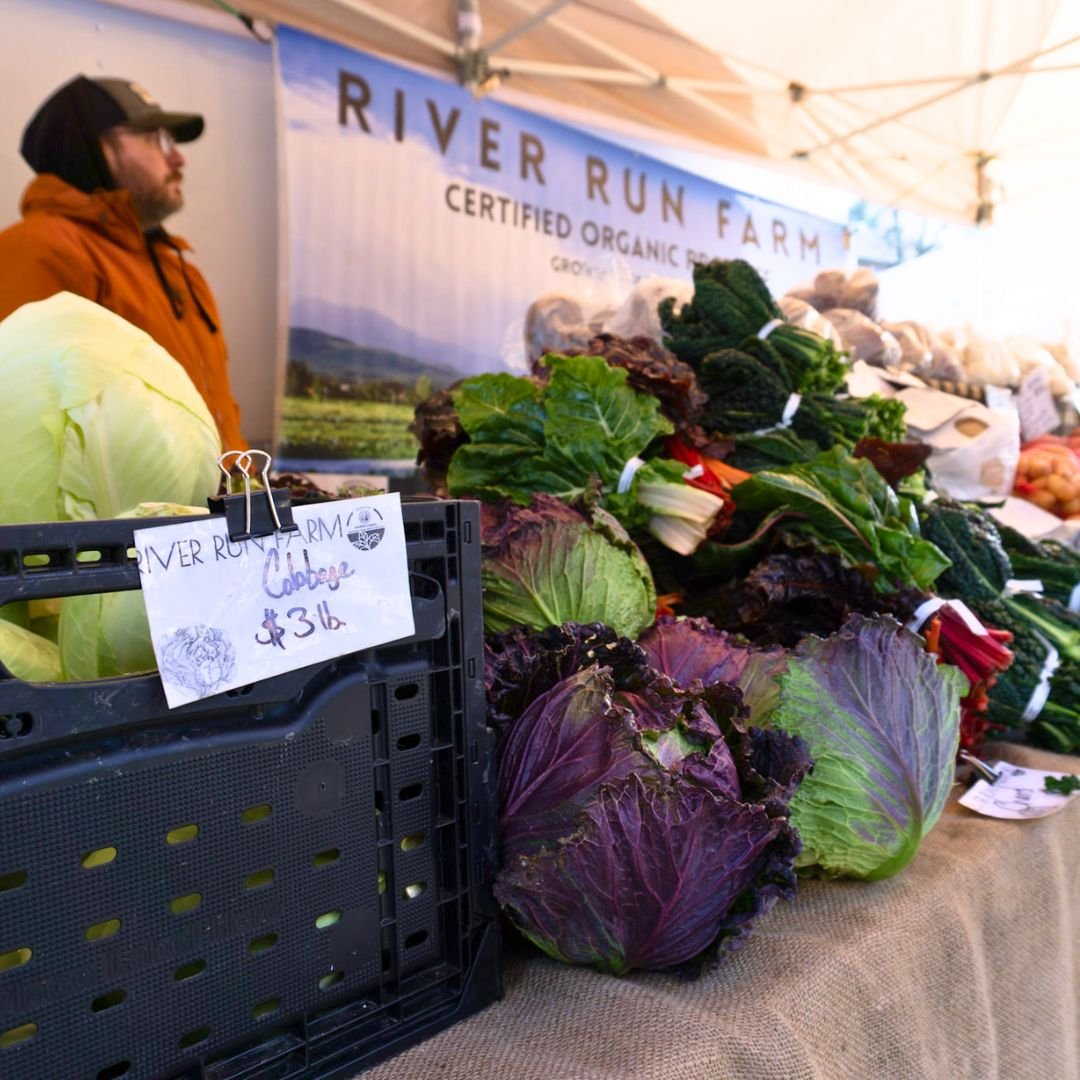
River Run Farm has enormous head’s of cabbage and lettuces during the winter at University District and West Seattle Farmers Markets.
Uses + Storage - Cabbages can be cooked, steamed, baked, fermented, or eaten raw in slaws and salads. Napa cabbage is most often used in Korean cooking and kimchi making. Red and green cabbage is preferred for most sauerkrauts. Cook them up in soups, or in dumplings or use them as a low carb wrap for meat and potatoes. Bok choy is a great addition to soups or as a steamed side for meat dishes. The uses for cabbage and cabbage leaves are truly endless.
Cabbage should be kept whole and unwashed for storage. It will last up to two months in the fridge, but it is recommended it be eaten sooner while it is fresher.
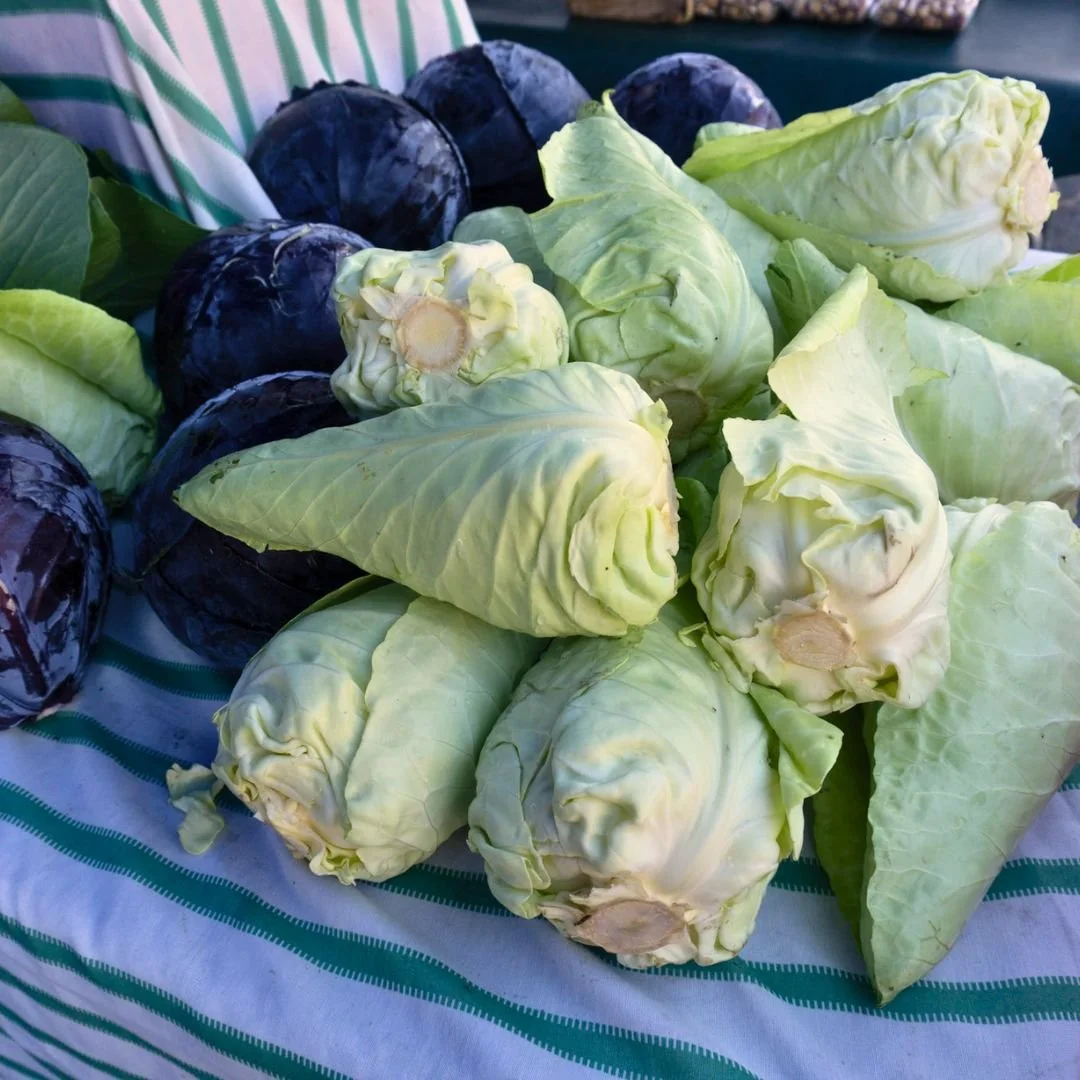
Cabrera Farm has excellent cone cabbages. Find them at University District in the winters.
How to pick a good cabbage - Make sure your cabbage is dense and heavy - this indicates good moisture and freshness. The leaves should be clean and waxy looking with little to no blemishes. They should not look wilty but crunchy. You can find many of these cabbage varieties at our winter markets at U-District, West Seattle, and Capitol Hill.
Recipes:
Sources: