
Winter Veggie Highlight: Beets
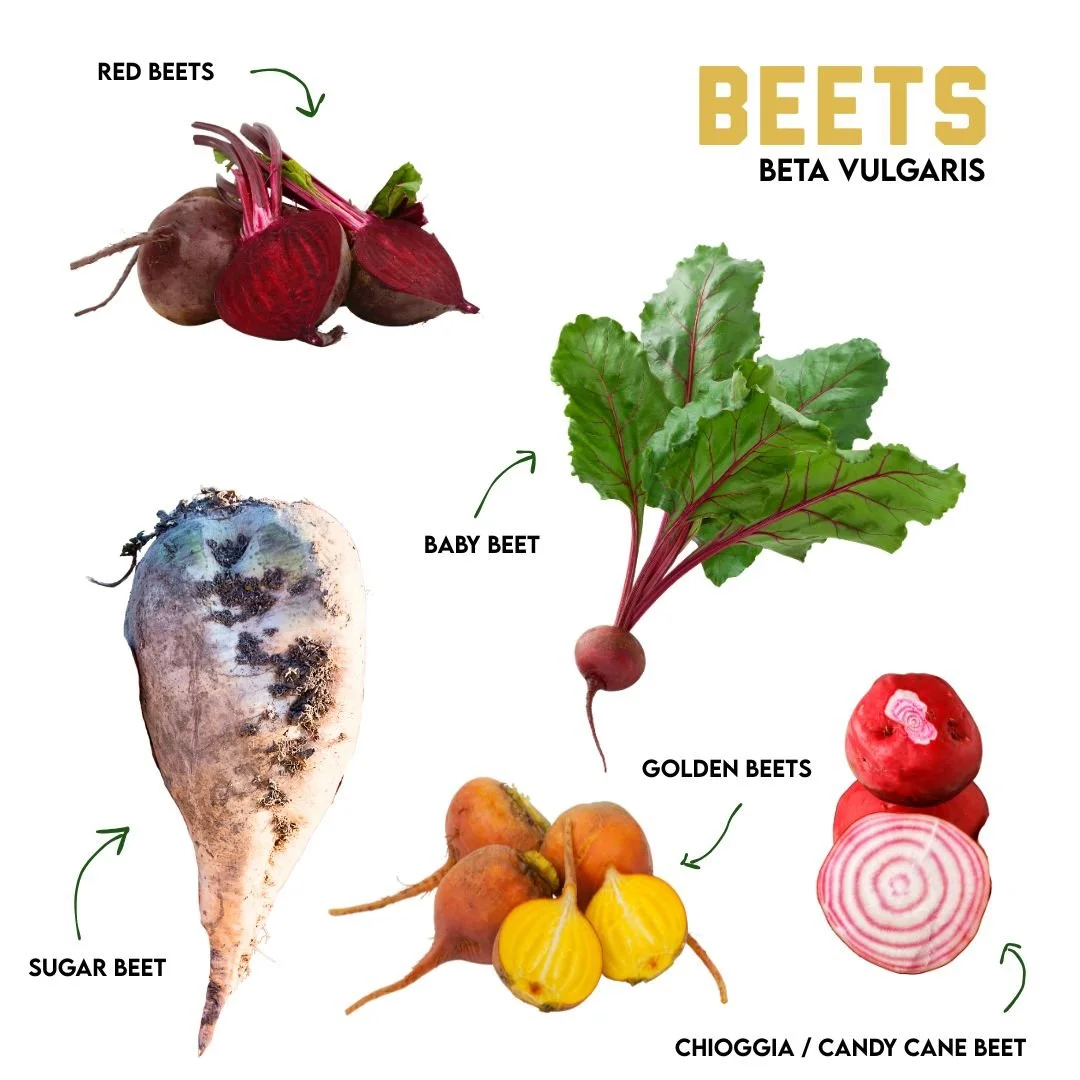
Introduction - Say hello to the sweetest veggie around. Beets have so much sugar content that they are used in about 20% of sugar production globally. Within the United States, sugar beets account for about 50% of sugar production! But beets are so much more than just sweet - they pack a real nutritional punch that’s quite unbeet-able.
Overview - Beets go by the scientific name of Beta vulgaris and originate from an ancient sea beet near Greece. They are related to Swiss chard and spinach. Humans started off only eating the greens of beets and then incorporated eating the root later on.
There are several varieties of beets with varying taste and nutritional profiles. Red beets contain much less sugar content than the sugar beet, which is used for sugar production. Red beets can also be used as a natural dye as they will stain just about anything they come into contact with, including your fingers, clothes and even urine. Beets contain a significant amount of iron and magnesium that is easily digestible and gentle on the gut.
Uses + Storage - Beets can be consumed raw, boiled, roasted, and steamed. You can shred them into a slaw, salad or pasta. You can bake with them too - you won’t even need food coloring to color your cakes or muffins. Baby beets tend to be more tender than the larger varieties so make for good raw snacks.
Remove and use the greens before storing. Store them dry and only wash when you want to use them. They will last 2-3 weeks in the fridge. It’s best to store them in a paper bag and not plastic.
How to pick a good beet - Beets should be smooth and free from deep insect grooves. If the leaves are still attached, make sure they are not wilted. Many of our farmers have rare varieties of beets so it’s worth asking specialty farmers for their favorites.
Recipes:
Sources: